
Mastering Essay Format: A Comprehensive Guide for Success
Mastering Essay Format: A Comprehensive Guide for Success
Writing an essay can often feel like a daunting task, especially when it comes to structuring it properly. Having a solid grasp of essay format is essential, as it not only helps convey your ideas clearly but also meets academic standards. In this comprehensive guide, I will share my insights on mastering essay format, focusing on the essential elements of structure, style, and tips that can elevate your writing skills. Whether you are a novice or an experienced writer, understanding these components will ensure your essays are compelling and engaging.
Understanding Essay Structure
At the core of effective essay writing lies a well-defined structure. The basic structure of an essay consists of three main parts: the introduction, the body, and the conclusion. Each of these components plays a crucial role in the overall organization of your essay.
1. Introduction
The introduction sets the stage for your essay. It presents your topic, provides necessary background information, and ends with a clear thesis statement that outlines the main argument or purpose of your essay. Here are some tips for crafting an effective introduction:
- Start with a hook: An engaging opening sentence can capture the reader’s attention. This could be a thought-provoking question, a relevant quote, or an intriguing fact.
- Provide context: Briefly explain the background of your topic to give readers a framework for understanding your argument.
- State your thesis: Clearly articulate your main argument or the purpose of your essay. This statement should guide your writing and keep you focused.
2. Body
The body of your essay is where you develop your argument. This section is typically composed of multiple paragraphs, each focusing on a specific point related to your thesis. Here are some key considerations for organizing the body of your essay:
- One main point per paragraph: Each paragraph should start with a topic sentence that introduces the main idea. This helps maintain clarity and focus.
- Use evidence: Support your arguments with evidence, such as quotes, statistics, or real-life examples. This not only strengthens your claims but also adds credibility to your writing.
- Logical organization: Organize your paragraphs in a way that flows naturally. You can choose to arrange them chronologically, thematically, or by the strength of your arguments.
3. Conclusion
The conclusion ties together your main points and reinforces your thesis. It should summarize the key arguments made in the body and explain the significance of your findings. Here are some tips for writing a strong conclusion:
- Restate your thesis: Remind readers of your main argument in a fresh way.
- Summarize key points: Briefly highlight the main points discussed in the body of your essay.
- End with a strong closing statement: Leave your readers with something to ponder, whether it’s a call to action, a thought-provoking question, or a statement that emphasizes the importance of your topic.

Essay Organization Techniques
Once I grasped the basic structure of an essay, I found that employing specific organizational techniques helped me enhance my writing. Here are some effective approaches:
Chronological Structure
This method is particularly useful for essays that discuss events in the order they occurred. For instance, if I were writing an essay on the history of the internet, I would present the development of the internet in a sequence that reflects its evolution—from the early days of ARPANET to the modern-day World Wide Web.
Compare-and-Contrast Structure
When writing about two or more subjects, comparing and contrasting can help clarify your points. I often use two methods for this:
- Alternating method: Each paragraph compares the subjects based on specific points of comparison. For instance, if I were comparing online learning to traditional classroom learning, I would address one aspect of each in alternating paragraphs.
- Block method: Each subject is covered in its entirety before moving on to the next. This is effective when I want to provide a comprehensive view of each subject before drawing comparisons.
Problems-Methods-Solutions Structure
This approach is beneficial for addressing specific problems. It involves defining the problem, discussing methods to address it, and proposing solutions. For example, if I were writing about the issue of climate change, I would first outline the problem, then discuss various methods of mitigation, and finally propose solutions based on my analysis.
Tips for Crafting Compelling Essays
To further enhance my essay writing, I have gathered several tips that can help make my essays more engaging and effective:
Use Signposting
Signposting involves guiding the reader through your essay by indicating the structure of your arguments. This can be done through phrases such as “In the following section, I will discuss…” or “Moving on to the next point…”. This technique not only clarifies your structure for the reader but also helps me stay organized.
Transition Words
Incorporating transition words and phrases can significantly improve the flow of my writing. Words like “however,” “furthermore,” and “consequently” help connect ideas and guide the reader from one point to the next.
Proofreading and Editing
One of the most important steps in the essay writing process is proofreading. After finishing my essay, I take the time to review it for grammatical errors, awkward phrasing, and overall coherence. It’s beneficial to read my essay aloud or have someone else review it to catch mistakes I might have overlooked.
Common Essay Formats
When it comes to essay formatting, different styles may be required depending on the academic discipline. Here are some common formats:
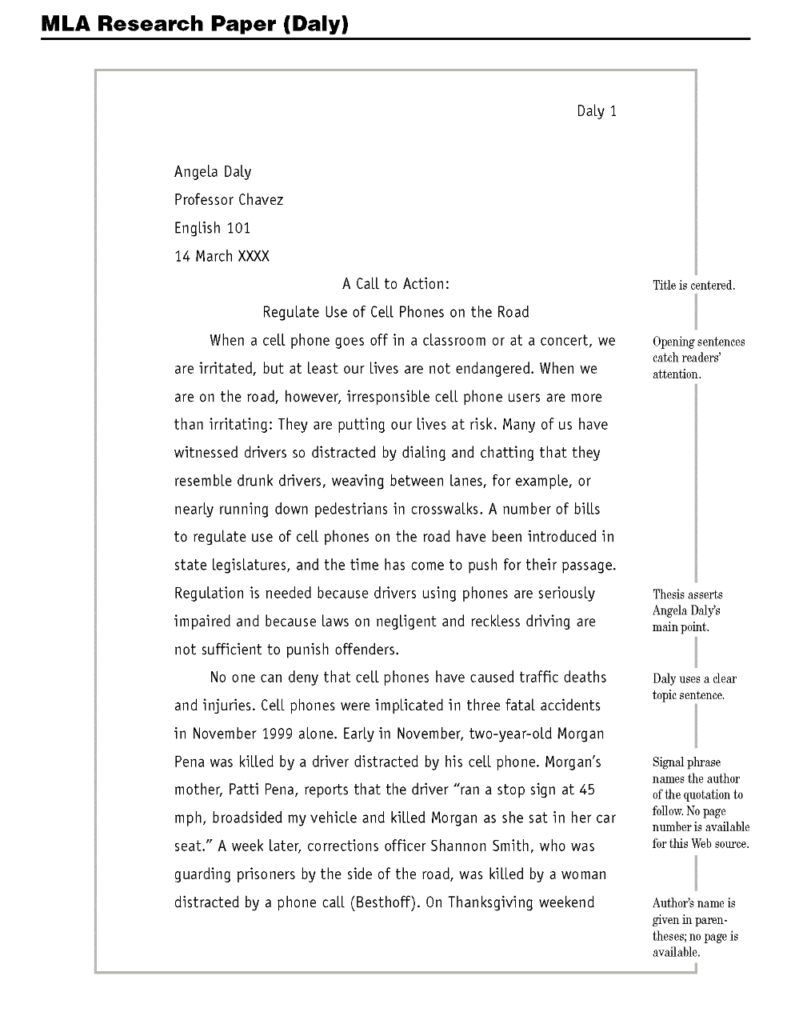
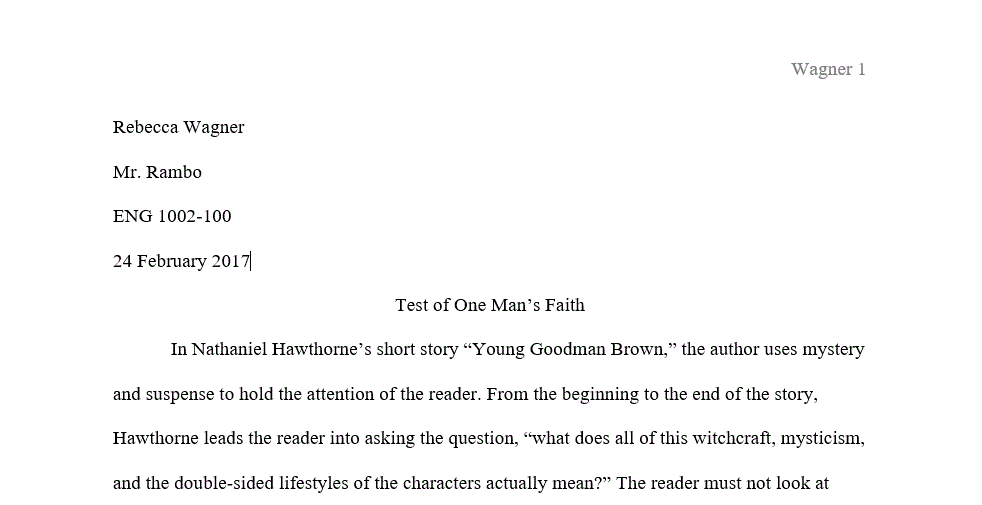
MLA Format
The Modern Language Association (MLA) style is commonly used in humanities disciplines. Key features of MLA format include:
- Double-spacing throughout the essay
- A header with my last name and page number in the top right corner
- A Works Cited page for references
APA Format
The American Psychological Association (APA) style is often used in social sciences. Key features include:
- A title page with a running head and page number
- Abstract summarizing the essay
- In-text citations and a References page
Chicago Style
Chicago style is versatile and used in various disciplines. Key features include:
- Footnotes or endnotes for citations
- A bibliography at the end
- Specific formatting guidelines for headings

FAQs
What is the importance of essay format?
Essay format is crucial because it helps organize thoughts, enhances clarity, and meets academic standards, making it easier for readers to understand and engage with the content.
How do I choose the right essay structure?
The choice of essay structure depends on the topic and purpose. Consider whether your essay is narrative, argumentative, or analytical, and choose a structure that best supports your message.
What are some common mistakes to avoid in essay writing?
Common mistakes include lack of clarity in the thesis, poorly organized paragraphs, and neglecting proofreading. It’s essential to ensure that each part of your essay contributes to the overall argument.
How can I improve my essay writing skills?
Improving essay writing skills involves practice, reading extensively, seeking feedback, and continuously refining your techniques. Reviewing well-structured essays can also provide insights into effective writing.
Are there resources available to help with essay writing?
Yes, there are numerous online resources, writing centers, and tutoring services available to assist with essay writing. Additionally, using writing tools can help streamline the writing and editing process.
Conclusion
Mastering essay format is an essential skill that can significantly enhance my writing abilities. By understanding the basic structure, employing effective organization techniques, and following specific writing tips, I can create compelling essays that engage readers and meet academic standards. Remember, practice makes perfect, so the more I write and refine my skills, the more confident I will become in my essay writing.
For more information on essay format and writing tips, you can explore resources like this comprehensive guide on essay writing.
By following this guide, I am confident that I can elevate my writing skills and produce essays that are not only well-structured but also compelling and impactful. Happy writing!
Share this article
Related Posts


